Linearprotocol collateral and LINA reward weighting in the 2021 design
Linearprotocol collateral in the 2021 design linked LINA-backed borrowing to reward eligibility, while other eligible digital assets received only partial reward treatment. LINA was the base collateral token for Buildr, the tool for creating Linear USD (LUSD) against a debt position. The design also proposed capped contributions from other digital assets. Reward eligibility depended on the account's pledge ratio, so collateral value and reward weighting answered different questions. Increasing backing didn't erase the debt that borrowing created. Linear Finance announced its closure in 2025. The later wind-down tied collateral release to debt repayment, changing the purpose of an existing stake review from earning rewards to recovering pledged tokens.
In short: In the 2021 design, full LINA reward eligibility still meant a proportional share, subject to the pledge-ratio requirement.
Collateral backing linked borrowing to reward eligibility
Staked assets supported the pooled debt that Buildr created, and LUSD connected that borrowing to synthetic assets called Liquids. The proposed hybrid model put LINA and qualifying non-LINA digital assets within this common collateral framework. LINA formed the base stake, with pro-rata exchange fees and inflationary token rewards available to qualifying stakers. The non-LINA portion had only partial entitlement to both streams. Acceptance as collateral and entitlement to rewards were separate conditions, even though they concerned the same debt-pool position.
Borrowing created an ongoing obligation: assets remained pledged against debt, so a collateral balance wasn't automatically a withdrawable balance.
Fee distributions and inflation rewards had different terms
The 2021 design separated weekly LUSD fee distributions from LINA inflation rewards, which carried a one-year lock. Synthetic conversions initially incurred a 0.25% fee on the proceeds. Qualifying stakers received proportional shares of the exchange fees in LUSD, subject to the pledge-ratio requirement. Those payments came from trading activity. Inflationary rewards came from the token model and followed different vesting terms.
Full LINA eligibility didn't mean receiving the entire reward pool. A qualifying stake received its proportional allocation.
The original inflation model automatically staked locked rewards in the debt pool. A locked reward allocation therefore contributed to a stake before it became freely available. The proposed non-LINA collateral portion remained only partially entitled to inflation rewards, just as it did to fee distributions.
The hybrid proposal kept LINA as base collateral
Other digital assets belonged to a capped hybrid proposal around LINA, with the cap intended for community adjustment through LinearDAO. The design sought to limit the non-LINA contribution to stabilize the LINA token economy. It described major or stable cryptocurrencies as potential collateral alongside the base token. The January 2021 whitepaper didn't specify an approved non-LINA token list, a numerical cap or a partial-reward percentage. The reference to major or stable cryptocurrencies didn't mean any token could be deposited. The accepted mixture and its limits were part of the proposed governance framework, so token compatibility alone couldn't define a valid collateral composition.
Real-world collateral was a long-term expansion goal in the January 2021 design.
What controlled reward eligibility when LINA's price changed?
The pledge ratio controlled reward eligibility, and changes in LINA's price could move a stake above or below the required threshold. The January 2021 design set the starting pledge ratio at 500%. That starting value meant collateral backing worth five times the debt value. Changes in collateral value affected the ratio even without a change in token quantity. The initial setting was adjustable through governance, so it wasn't a permanent threshold for every later deployment.
The reward gate depended on maintaining the applicable collateral coverage. A healthy ratio didn't establish a fixed reward amount, because allocations still followed proportional participation and their separate distribution terms. Collateral composition added another condition: a qualifying hybrid position didn't erase the non-LINA portion's partial reward entitlement.
Pool exposure affected the debt behind the stake
A staker's liability followed the synthetic portfolio that the debt pool backed, so its later value could differ from the original borrowing amount. Price movements and the pool's overall long and short exposures affected the collective debt. The design tracked each staker's debt proportion through building and burning history. A larger collateral balance therefore didn't establish that the repayment obligation had stayed constant. Outstanding debt remained part of the collateral comparison, alongside the composition and market value of the stake.
LINA price changes affected backing, while movements in the synthetic portfolio affected the debt side. Additional collateral could improve coverage without freezing the liability, and a qualifying ratio didn't protect the collateral's market value. The reward advantage of a base-token stake therefore came with exposure to LINA's price and participation in the shared debt pool.
How did adding LINA differ from burning LUSD?
Adding LINA increased the collateral side of the pledge ratio, while burning LUSD reduced the debt side. Both actions could restore an under-threshold position within the original design. Their starting point was the existing debt-pool account and its backing. The same model also described the choices available after collateral value rose: retaining a larger buffer or building additional LUSD.
| Historical option | Pledge-ratio effect | Affected assets and obligations |
|---|---|---|
| Stake more LINA | Increased backing relative to existing debt | More LINA staked; the debt obligation remained |
| Burn LUSD against debt | Reduced debt relative to existing backing | LUSD consumed for repayment; debt decreased |
| Retain a higher ratio | Kept the extra buffer after collateral value rose | Collateral remained pledged without additional LUSD creation |
| Build more LUSD | Used additional capacity while the minimum still applied | More LUSD created alongside a larger debt obligation |
Added backing committed more LINA to staking. An LUSD burn consumed the repayment asset and reduced the obligation, so matching token quantities couldn't establish equivalent account effects. Additional borrowing required sufficient collateral coverage before new debt was created. The larger LUSD balance came with more pool debt, while keeping the higher ratio left the extra backing in place.
The 2021 liquidation and insurance proposals
LinearDAO was intended to govern collateral-related parameters, including the pledge ratio and the accepted mixture of LINA and other assets. The design placed these settings within a community proposal and voting process.
A 150% ratio appeared as an example in the proposed liquidation roadmap. It wasn't an established universal liquidation trigger.
The roadmap also proposed an insurance fund to address liquidation losses. Community decisions were intended to determine its funding, potentially using part of the transaction fees. The contemplated liquidation mechanism included punitive conversion terms and possible system profit or loss. Those provisions addressed stressed debt-pool conditions, separate from the ordinary reward-eligibility comparison.
During the 2025 wind-down, the Liquidator had already been switched off. Earlier liquidation proposals couldn't establish an available exit mechanism for that period.
The 2025 closure shifted collateral decisions toward exit
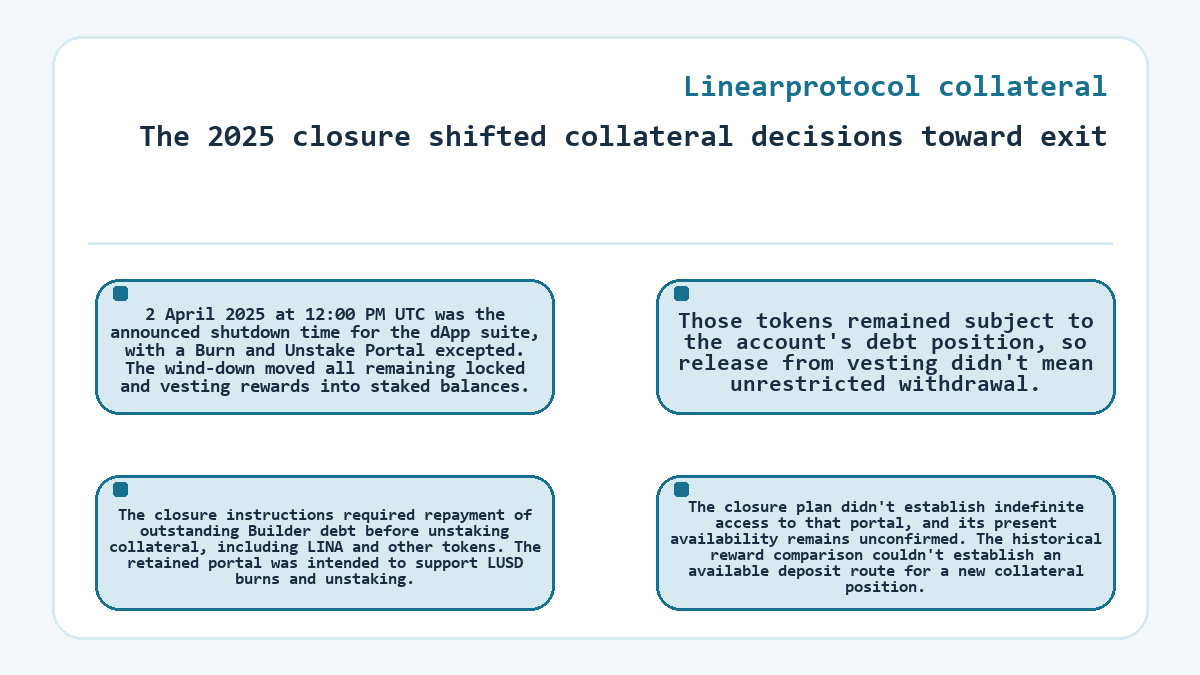
2 April 2025 at 12:00 PM UTC was the announced shutdown time for the dApp suite, with a Burn and Unstake Portal excepted. The wind-down moved all remaining locked and vesting rewards into staked balances. Those tokens remained subject to the account's debt position, so release from vesting didn't mean unrestricted withdrawal. The closure instructions required repayment of outstanding Builder debt before unstaking collateral, including LINA and other tokens. The retained portal was intended to support LUSD burns and unstaking.
The closure plan didn't establish indefinite access to that portal, and its present availability remains unconfirmed. The historical reward comparison couldn't establish an available deposit route for a new collateral position.
Details worth knowing about Linearprotocol collateral
Did the ERC-20 standard make a token eligible for collateral rewards?
ERC-20 compatibility didn't establish collateral acceptance or reward entitlement. The 2021 design identified LINA and LUSD as ERC-20 tokens, yet assigned them different roles. LINA backed the base collateral stake, while LUSD connected borrowing, synthetic exposure and repayment. The common token standard didn't give both assets the same collateral status.
Was the starting 60% inflation figure an annual return on collateral?
The starting 60% inflation figure used the tokens designated for staking as its basis, so it wasn't an annual yield promise on collateral. The 2021 model linked subsequent inflation to circulating supply and expected exchange-volume growth. Individual rewards also followed proportional allocation and pledge-ratio eligibility, rather than a fixed return on each deposited token.
When could stakers claim unlocked collateral rewards?
The 2021 design scheduled unlocked weekly distributions for Wednesdays. That claim schedule didn't remove the one-year lock on inflationary rewards. A claim opportunity, reward eligibility and release from vesting described different conditions. The Wednesday schedule belonged to the historical design and didn't establish a continuing rewards program after the closure announcement.
Which reward settings fell within LinearDAO's planned remit?
LinearDAO's planned remit included LINA inflation rewards and their frequency, along with transaction-fee allocations. The proposed fee destinations included burning, fee claims and Linear Reserve. Those settings connected collateral incentives to the broader token model and governed how trading-fee income would be divided between rewards and other uses.
How did the proposed architecture separate collateral operations from Ethereum governance?
The 2021 architecture assigned LINA and LinearDAO components to Ethereum, while placing Buildr and exchange logic on EVM-compatible partner chains. This separated token and governance activity from synthetic-asset borrowing operations. The design aimed to retain Ethereum integrations while using partner-chain operations to reduce borrowing and exchange transaction costs.
Were debt-pool balancing bonuses a replacement for staking rewards?
The proposed balancing bonuses added LINA rewards to ordinary inflation rewards and the transaction-fee split. They targeted synthetic positions that counterbalanced the pool's net exposure. Eligibility concerned the balancing activity described in the design, so the size of a collateral deposit alone didn't establish entitlement to those additional incentives.